Inside the Journey to Marsabit’s Hijab Accord
A story of trust broken, tested, and rebuilt how the Inter-Religious Council of Kenya mediated upon Marsabit Interfaith Council with two faith communities from a courtroom deadlock to a signed Memorandum of Understanding.
For as long as anyone in Marsabit can remember, the county’s many faiths, tribes and cultures have leaned on one thing when everything else threatened to pull them apart: each other. Climate-induced conflict, political rivalry, cultural friction Marsabit has absorbed all of it and still found its way back to unity.
Then a question arrived that tested that unity more than most: could Muslim girls wear the hijab in Christian-sponsored public schools?
It should have been a small accommodation. It became, for a season, a fault line running through families, staffrooms and congregations one that would ultimately take sixteen months, a High Court and Court of Appeal that could not agree, and an unlikely breakthrough in a border town called Watiti, to close.
A Question of Rights, A Question of Codes
On one side stood Article 32 of the Constitution freedom of religion and belief and the broader guarantees against discrimination that Kenya’s supreme law affords every learner. On the other stood the dress codes and institutional character that church-sponsored schools have held for generations. Litigation between the two positions reached a dead end, with the High Court and Court of Appeal issuing differing rulings and leaving the Ministry of Education, the National Cohesion and Integration Commission (NCIC), and religious leaders straining to balance competing, legitimate interests.
“She hasn’t been covering her head all this time since Grade 2, why are they pushing to make it an issue now”— A Christian parent, during an early IRCK community engagement
It was a fair question, asked in good faith, and it captured exactly how far apart the two positions had drifted.
With the courts unable to settle it, the matter came to rest with the Marsabit Interfaith Council (MIC) the county-wide umbrella bringing together Muslim and Christian faith communities, chaired by Bishop Peter Kihara, Catholic Bishop of the Diocese of Marsabit. For a platform that had spent years preaching tolerance, justice and love, this was its mandate under the harshest possible light.
“Some of our members at first absconded our Council meetings for fear of backlash from their communities and congregations.”— Sheikh Bashir Somo, Secretary, Marsabit Interfaith Council
Even the peacebuilders were afraid.
A Mediation Begins..
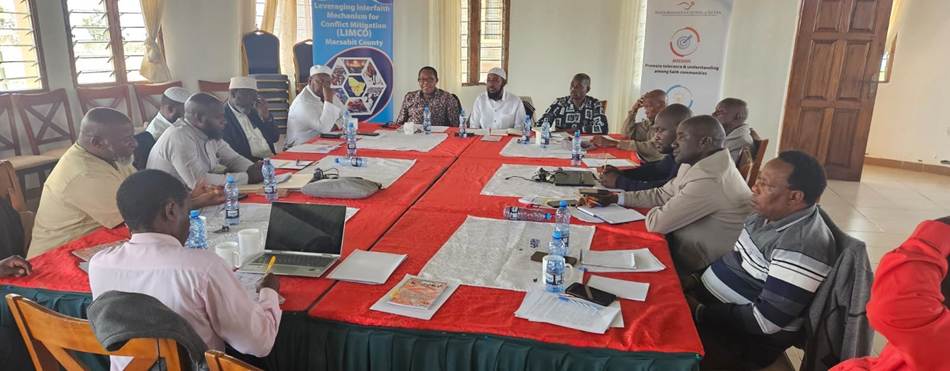
MIC turned to IRCK to facilitate. In April 2026, both Muslim and Christian communities nominated representatives to a Joint Social Cohesion Secretariat, established with the support of Christian Aid and Islamic Relief Kenya partners who had worked in the region for years and were, at the time, already rolling out the Leveraging Interfaith Mechanisms for Conflict Mitigation (LIMCO project ) across Saku and Moyale sub-counties. LIMCO’s own architecture strengthening the MIC, building Early Warning and Early Response systems, deepening social cohesion, and advancing advocacy and linkages gave the mediation a structure to lean on and a network of trust already partly built.
It did not make the first meeting easy. Justice delayed felt like justice denied, and rejection was hardening among Christian communities across the county. The first sitting lasted barely thirty minutes. The hall was nearly empty. Old friends who had walked the peacebuilding road together for years found themselves, for the first time, on opposite sides of a table.
By the second meeting, the twelve-member mediation team resolved to name the deeper currents feeding the hijab dispute religious extremism, religious zoning, and the quiet competition for followership between two evangelising faiths. Hijab was simply where all of it surfaced. Representatives were given time to consult their congregations before any decision on accommodating the hijab could be brought back to the table.
The Deadlock and Paradise Inn
On 24th April 2026, at Paradise Inn in Marsabit, during what would become a defining session, the discomfort on the Christian side was impossible to miss.
“What will they ask next after hijab? Will they demand a mosque? Will they also ask for special meals and diet during Ramadhan?”— Pastor John Kimemia, Chairman, Marsabit Pastors Fellowship
A question that named, more honestly than anything else said that day, the fear driving the resistance: not the hijab itself, but what people believed it might open the door to.
It was, by every account, a deadlock. Somewhere in that uncertainty was a schoolgirl whose right to an education now hinged on whether adults many kilometres from her classroom could find a way to agree. The County Board of Education and County Director of Education held their own process in reserve, placing their faith instead in the Interfaith Council to find the amicable route.
Then, in a session that no one in the room had planned for, the Christian leaders called for a timeout the kind of pause a team takes mid-match to regroup. Ten minutes. The Muslim leaders stayed in the room, waiting, unsure what was coming.
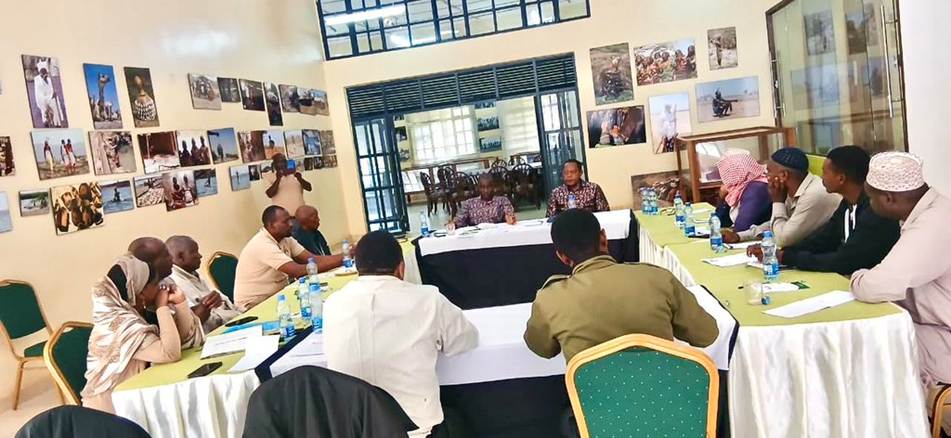
When the Christian delegation returned, Bishop Kihara spoke quietly: an MOU would be needed to safeguard whatever was agreed with conditions. The document, they said, must state plainly that there would be no further demands: no request, now or later, for land to build a mosque, no claim for special meals during Ramadhan. All of it, they insisted, needed to be on the table, named and closed off, before trust could move forward.
The ball was now in the Muslim delegation’s court to demonstrate, on paper, that there was no hidden agenda. The meeting ended without agreement. Even between people who had known each other for years, trust does not rebuild on schedule.
“Bishop Qampicha, several times I have been to your house you even laid a mat in your own living room for me to pray. How difficult is having hijab in a public school?”— Sheikh Kutara Omar
It was a fair question too. And for two months, it went unanswered. Both sides held their lines on what Christians called necessary safeguards and Muslims called an assumption of bad faith a document that treated a community’s future requests as a threat, drafted by people who feared what might happen once “the pioneers are long gone.”
The Breakthrough Nobody Saw Coming
The silence broke from an unexpected direction.
In late July, in Watiti, on the border of Moyale and Wajir, a young Christian man who had quietly concealed his faith for years — out of fear of exactly the kind of intolerance now playing out in the hijab debate — received a death threat at a public gathering. On 20th July, he reached out to Bishop Qampicha, a MIC member and his spiritual father. Bishop Qampicha alerted the rest of the Council on their WhatsApp group:
“We need to visit Watiti and address the religious zoning. We have to stand as we have always against religious intolerance.”— Bishop Qampicha alerted his fellow interfaith members
Neither he nor anyone else on that thread yet knew that Watiti would become the turning point for the hijab mediation.
Over two weeks of engagement with the parties involved, MIC members arrived at the same conclusion from a different direction: religious intolerance in one form was religious intolerance in every form. If they could stand for a threatened Christian in a Muslim-majority border town, they had to find a way to stand for a Muslim schoolgirl wanting to wear her hijab in a Christian-sponsored school. The same principle covered both. That day, the Council committed to finally close the hijab question so that its members could return, undistracted, to the work of building peace across the county.
MIC reached out to IRCK for one final push: a review and signing of the MOU.
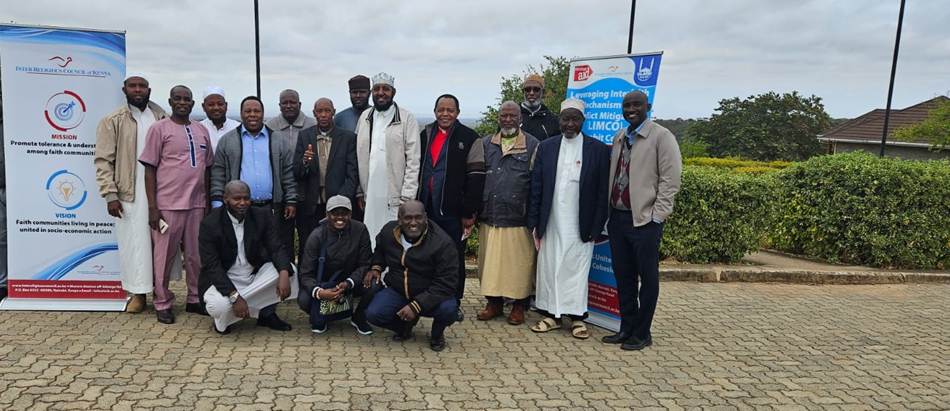
Closing Circle
What followed was a carefully rebuilt document. Working from the feedback gathered across every session from Sheikh Bashir Somo’s formal written submissions on the scope of the MOU, to the contested clauses debated in June, to the two-day consultative meeting held on 3rd–4th August 2026 at Bongole Resort and Sand and Rock Resort in Saku IRCK’s secretariat reworked the most sensitive provision in the entire agreement.
Where an earlier draft had framed the accommodation in the language of prohibition a section originally titled “Good Faith and Limitations” the final MOU reframed it as “Good Faith and Scope of Accommodation.” Ramadhan meal accommodations were no longer blanket-banned; prayer space was affirmatively committed to rather than foreclosed; the question of a future mosque was repositioned as a matter for each school sponsor’s discretion, not a binding prohibition written permanently into an agreement between two faiths that would need to trust each other for years to come. It was a small shift in wording and a large shift in posture from an agreement built to prevent future demands, to one built to hold a relationship.
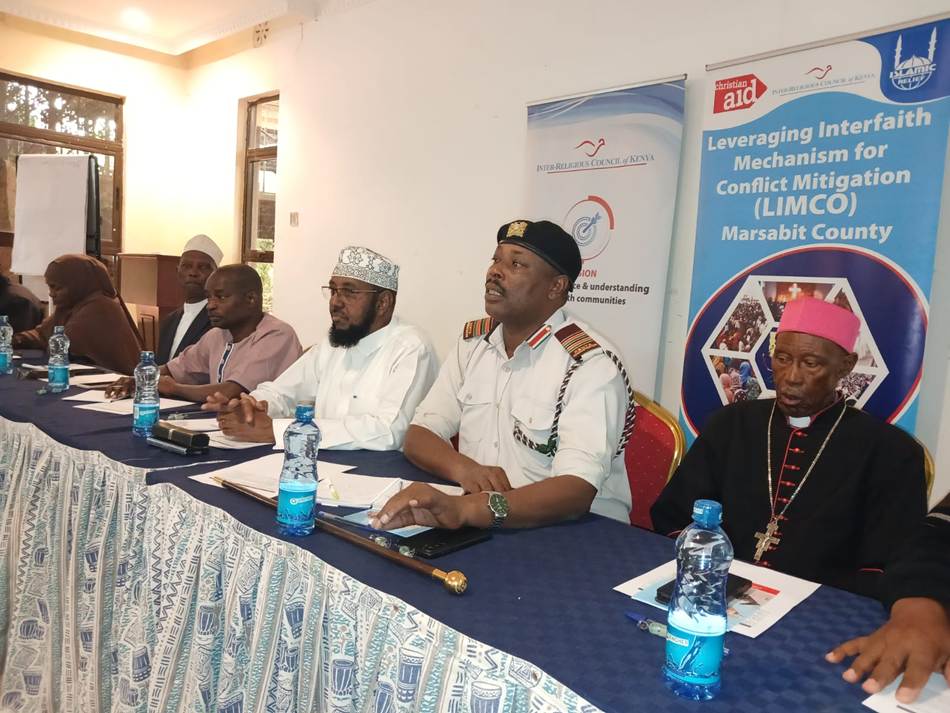
The Memorandum of Understanding was formally signed between the Marsabit Interfaith Council, representing both Muslim and Christian communities, and the Boards of Management of public schools in Marsabit County, with IRCK standing as the neutral facilitating body. It establishes a Joint Social Cohesion Steering Committee to oversee implementation, sets out designated liaison officers, and runs for an initial term of three years a living framework, not a one-off settlement.
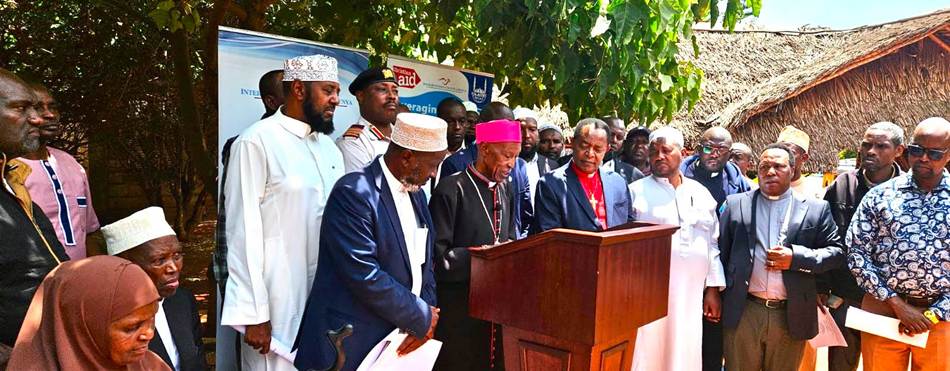
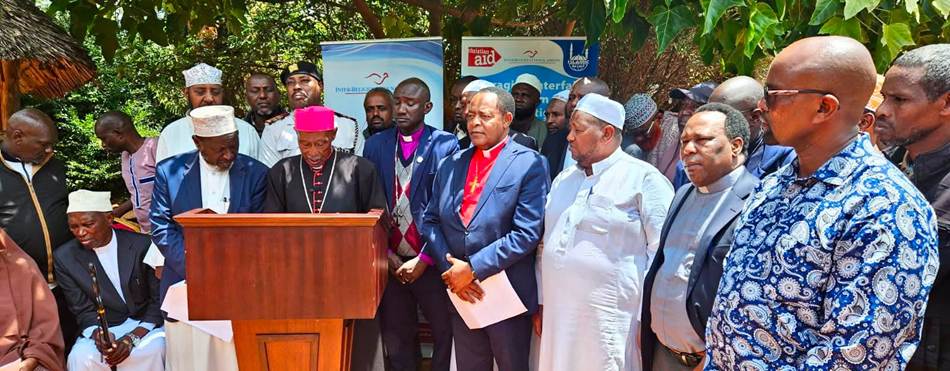
The signing ceremony was held in a colourful event at Sand and Rock Resort, attended by the Deputy County Commissioner, the CEC for Education, the County Director of Education, the Chair of the County Board of Education, school BOMs, principals, media, and religious leaders and communities from across Marsabit.
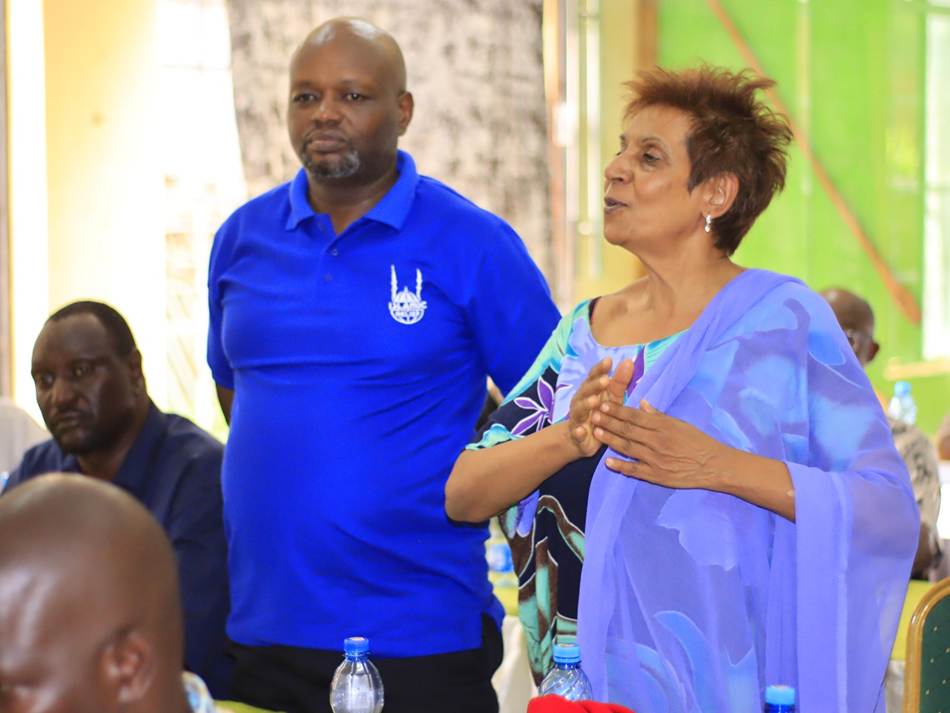
It was, fittingly, the same platform MIC, IRCK, Christian Aid, Islamic Relief Kenya, the schools, the county government that had carried the process from its most fragile opening meeting to this moment. In their closing remarks, religious leaders did not stop at the hijab question. They spoke, too, to the wider state of the nation and the county, using the occasion to reaffirm a shared commitment: that Marsabit’s communities would keep choosing dialogue over division, whatever question came next.
What Marsabit Has Given Kenya
There is a version of this story that is simply procedural: a mediation process, a series of minutes, a signed MOU. But that misses what actually happened in Marsabit over sixteen months.
A community was asked to hold two true things at once the right of a Muslim girl to practice her faith, and the right of a Christian institution to its character and its fears and, rather than let the courts or politics decide for them, chose to sit in the same room, walk out of it in frustration more than once, and come back anyway. It took a frightened young man in a border town, willing to trust his spiritual father with a threat to his life, to remind the mediators that intolerance does not choose sides and that the principle they were fighting to protect for one community was the same principle the other needed protected too.
Marsabit did not resolve this by declaring a winner. It resolved it by building slowly, imperfectly, sometimes in ten-minute walkouts and two-month silences a structure both communities could still trust with the next disagreement, and the one after that.
That is the model IRCK now offers to every other county carrying its own version of this tension: not a shortcut past the discomfort, but a demonstration that the discomfort, sat through honestly and patiently, is usually the only road to an agreement that actually holds.