
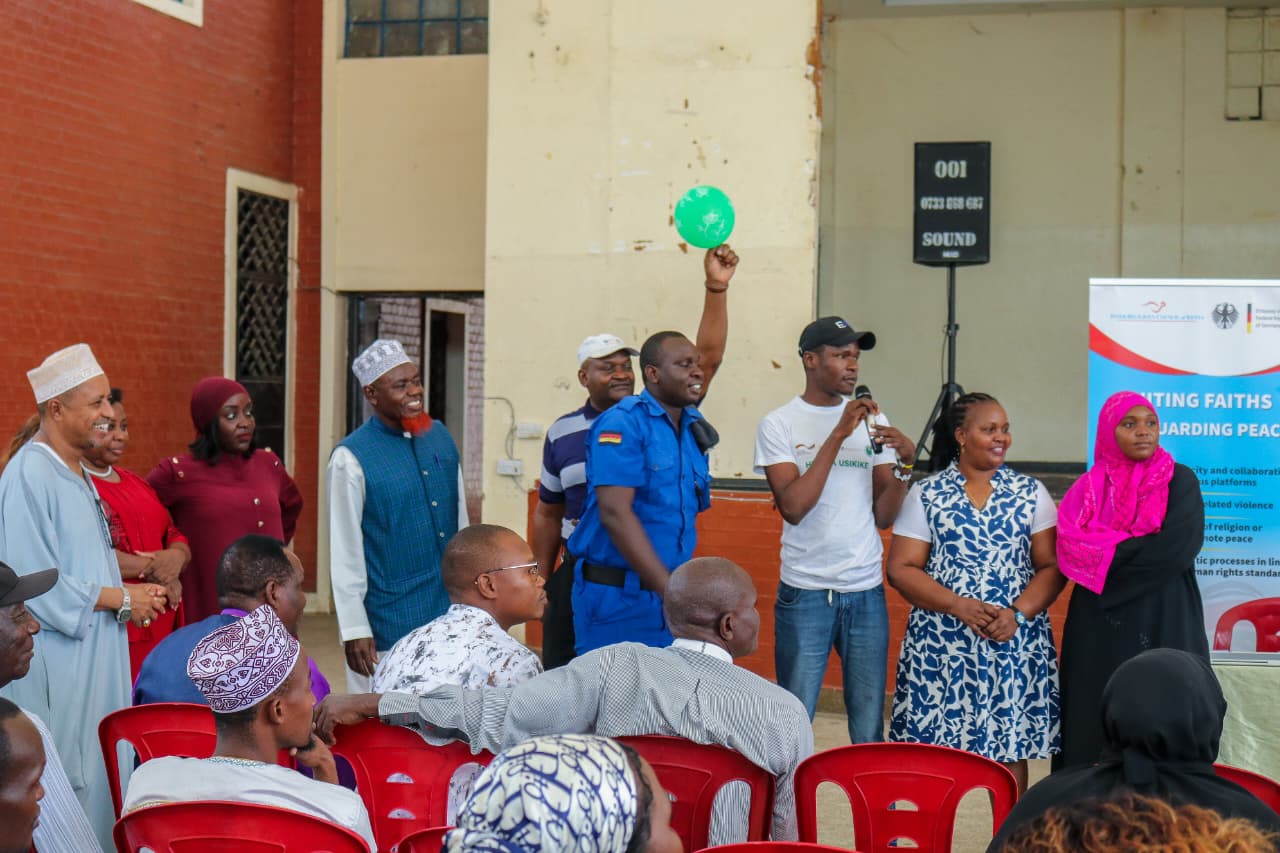
A year before the 2027 General Election, the Inter Religious Council of Kenya (IRCK) mobilised faith leaders to protect freedom of religion and belief (FoRB) and prevent election related violence. IRCK opened a national legal and policy track on the regulation of religion and held county interfaith dialogues in Kisumu and Mombasa, both named by NCIC among the five counties most at risk of electoral violence, and in Marsabit. Each county now has a locally owned early warning and response pathway linking religious leaders, peace committees, administration and security agencies. Women made up 40.4% of participants, meeting the 40% benchmark.
National: On 9 September 2026, the IRCK Executive Committee met at Pride Inn, Nairobi, to review an analysis of the Religious Organisations Bill, 2024 and a state of the nation briefing, and issued a statement calling for self-regulation of faith institutions rather than state licensing. The EC resolved to engage a legal drafter and form a committee to collect issues from all nine Religious Coordinating Bodies on gaps in the Societies Act, ahead of the National Scholars’ Dialogue. The meeting reached 15 leaders, 10 male and 5 female, including 1 youth.
Kisumu: A two-day County Interfaith Dialogue Forum at ACK Old Cathedral Hall on 27 and 28 August brought religious leaders, peace committees, women, youth and security agencies together on profiling, inclusion gaps and misinformation. The OCS Nyalenda and OCS Kadibor committed to act on community information, and actors agreed a dated plan to restructure and induct peace committees, revive Amani Clubs and hold a sport for peace event in November. Kisumu reached 110 people, 60 male and 50 female, including 28 youth.
Mombasa: The August forum at Tononoka Social Hall mapped FoRB concerns, sub county hotspots and political rhetoric, with the OCS Tononoka in attendance at IRCK’s request. In September, a session marking the International Day of Peace used NCIC’s roadmap and a simulated nomination crisis to produce a county early warning chain, a multi-agency coordination design and a peace calendar to December 2027. Mombasa reached 114 people, 65 male and 49 female, including 44 youth.
Marsabit: Working through the Chief’s Baraza, religious leaders, elders, women and youth carried out a conflict scan of Marsabit Central, identified seven hotspot areas linked to water, pasture, livestock theft and cross border dynamics, and agreed to make conflict a standing agenda item at every baraza. Marsabit reached 46 people, 35 male and 11 female, including 11 youth.
Media Links
Kisumu County
Mombasa County
